
There was a time when a corporate web portal meant a login screen, a dashboard, and a list of links. That era is officially over. Web portal development in 2026 are living digital ecosystems, intelligent platforms that learn user behavior, personalize content in real time, auto-generate interfaces, and protect themselves against threats before an IT team even notices. At the center of this transformation is artificial intelligence, not as a feature, but as the foundational layer that powers every interaction.
If you're a business owner, product manager, CTO, or developer responsible for a web portal, this guide is your strategic compass. We've synthesized insights from the latest research, developer surveys, and industry reports to bring you the most impactful AI trends reshaping portal development right now and what each one means for your bottom line.
Let's get into it.
1. Agentic AI Workflows: From Code Assistant to Autonomous Developer
The biggest mindset shift happening in portal development today is the move from using AI to orchestrating AI.
Just a few years ago, tools like GitHub Copilot offered little more than smart autocomplete. Today, agentic AI workflows allow development teams to delegate entire segments of the build process UI scaffolding, API integration, test generation, and even deployment to autonomous AI agents that work in coordination with human oversight.
Industry data underscores how fast this is moving. According to recent developer surveys, over 70% of developers now use AI-assisted coding tools daily. More telling is what these tools are doing: not just suggesting a line of code, but generating entire full-stack flows from a natural language description or a design file.
For portal development specifically, this means:
Drastically shorter build cycles. AI-powered development pipelines are compressing project timelines by 30–50%, allowing businesses to ship portal features in weeks rather than months.
Smarter resource allocation. Agentic workflows can autonomously handle repetitive tasks like writing boilerplate, refactoring legacy components, or optimizing database queries, freeing senior developers to focus on architecture and user experience.
Consistent code quality. AI agents reduce human error in routine implementation, resulting in cleaner, more maintainable portal codebases.
The practical implication for your organization: if your portal team is still assigning developers to write repetitive CRUD operations or manually wire up API endpoints, you're paying premium engineer rates for commodity work. Agentic AI handles that now. Your developers should be orchestrating, reviewing, and designing not typing boilerplate.
2. Hyper-Personalization Powered by Predictive Analytics
The era of "one portal for all users" is dead. In 2026, the competitive standard is a portal that adapts itself to its layout, content, navigation, and recommendations based on who is viewing it and what they're likely to need next.
This is hyper-personalization, and it's made possible by AI systems that build unified user profiles across devices, predict intent in real time, and continuously learn from every session.
What does this look like in a real portal context?
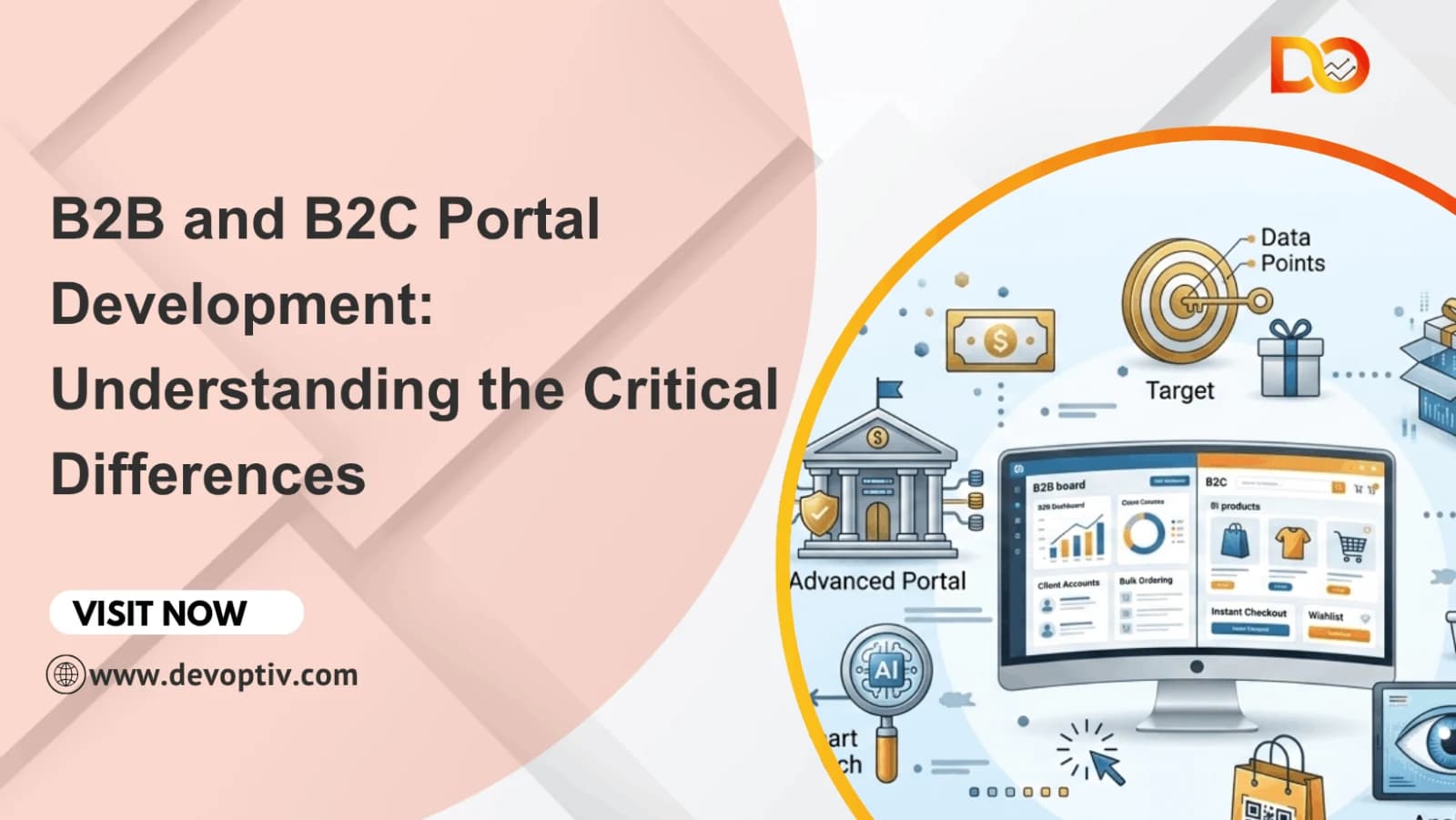
A B2B client portal that surfaces different dashboards depending on whether the logged-in user is a procurement officer, a finance manager, or a technical lead without any manual configuration.
An e-learning portal that dynamically restructures course content, pacing, and assessments based on individual learning patterns and performance history.
An enterprise intranet that learns which reports, tools, and communication threads each employee uses most and promotes them proactively at the top of their view.
Businesses that have implemented AI-driven personalization in their portals are seeing meaningful commercial results, with some reporting conversion rate uplifts of over 25%. The business case is no longer speculative.
For implementation, the key requirement is structured, reusable content architecture. AI personalization layers need content stored as independent, composable components not locked inside presentation templates. If your portal's content is tightly coupled to a specific layout, you'll need to decouple it before personalization AI can do its job.
3. Edge AI: Intelligence at the Speed of the User
One of the most significant infrastructure shifts in portal development this year is the move from centralized computation to edge AI running AI models directly on distributed edge nodes located close to end users, rather than routing every request back to a central data center.
For portal developers and operators, the practical benefits are substantial:
Near-zero latency personalization. Recommendations, content variations, and fraud detection happen in milliseconds at the edge, without a round-trip to a central server.
Enhanced data privacy. Sensitive user data can be processed locally without being transmitted across networks, which is increasingly important for portals handling financial, healthcare, or HR data.
Resilience under load. Edge AI distributions prevent any single server from becoming a bottleneck during traffic spikes particularly valuable for enterprise portals with global user bases.
Platforms like Vercel, Cloudflare Workers, and AWS Lambda@Edge have made edge deployment accessible to most development teams in 2026. What was experimental infrastructure two years ago is now a production-grade standard. For any portal serving users across multiple regions or operating in latency-sensitive industries, edge-first architecture is no longer optional.
4. AI-Generated UX and Adaptive Interfaces
The static portal interface where every user sees the same layout, menu structure, and page hierarchy regardless of context is being replaced by AI-generated, adaptive interfaces that reconfigure themselves based on user behavior, device, and session context.
This is more than A/B testing. Modern AI-powered interface systems can:
Analyze real-time behavioral signals (scroll depth, click patterns, time-on-section) and adjust the layout mid-session to reduce friction.
Automatically generate responsive layouts that adapt not just to screen size, but to the cognitive context of the user surfacing complex data for power users and simplified views for occasional visitors.
Run continuous micro-experiments, automatically identifying which component arrangements drive the highest engagement and rolling them out without developer intervention.
What's particularly relevant for portal teams is how this intersects with design systems. Tools like Webflow AI and Wix AI are demonstrating that AI can take a brand's design rules and generate fully responsive, accessible page structures automatically handling breakpoints, component spacing, and CMS logic without manual CSS work.
The result is a portal interface that isn't designed once and maintained forever, but one that evolves continuously in response to user data. For organizations with large, complex portals (think enterprise intranets, customer self-service platforms, or multi-tenant SaaS dashboards), this adaptive capability means significantly lower long-term maintenance costs.
5. AI-First Development with Meta-Frameworks
At the technical architecture level, 2026 marks the consolidation of meta-frameworks as the default starting point for serious portal projects and these frameworks are being deeply integrated with AI tooling.
Frameworks like Next.js and Nuxt now handle routing, data fetching, caching strategies, server-side rendering, and API layers in a single cohesive environment. The manual configuration overhead that used to consume days of developer time has been largely eliminated.
The move to server-first rendering (via React Server Components and SSR defaults) is particularly important for data-heavy portals. The approach sends only the JavaScript necessary for interactivity to the client, keeping the portal lightweight and fast. For portals that aggregate data from multiple enterprise systems ERP, CRM, analytics platforms this is a meaningful performance improvement.
TypeScript has also completed its transition from "recommended" to "required" for professional portal projects. End-to-end type safety across the full stack dramatically reduces regressions, accelerates onboarding for new developers, and makes large portal codebases significantly easier to maintain and extend.
For portal stakeholders, the business implication is straightforward: teams using modern meta-frameworks with AI tooling are shipping higher-quality features, faster, with fewer post-launch issues. Legacy portal stacks built on older configurations represent growing technical debt that increasingly limits how quickly your portal can respond to changing business needs.
6. Low-Code and No-Code AI Builders: Democratizing Portal Development
One of the most commercially disruptive trends of 2026 is the rapid maturation of AI-powered low-code and no-code platforms that enable non-technical stakeholders to contribute meaningfully to portal development.
The numbers tell the story: the global low-code platform market is projected to reach $35 billion by 2030, growing at roughly 23% annually. Nearly 40% of web designers are now using AI tools daily. Gartner has projected that over 70% of new applications will involve low-code or no-code development by 2025–26.
For organizations with portals, this trend has direct operational implications:
Marketing teams can update and personalize portal content, run campaigns, and manage landing experiences without raising a development ticket.
Operations teams can configure workflow automations within the portal without custom code.
Product managers can prototype new portal features and validate them with users before engineering resources are committed.
Platforms like Bubble, Webflow, and enterprise tools like OutSystems are integrating generative AI that doesn't just assemble pre-built components, it understands intent and generates the complex underlying logic to match it.
This doesn't eliminate the need for experienced developers. Complex portal requirements, custom integrations, performance-critical features, security-sensitive modules still require professional engineering expertise. But it does change the team structure around portal development, enabling leaner teams to move faster on more of the work.
7. AI-Driven SEO and Generative Engine Optimization (GEO)
For portals that rely on organic search traffic and most do 2026 introduces a new dimension to content strategy: Generative Engine Optimization (GEO).
Traditional SEO optimizes for how Google's crawler ranks pages. GEO optimizes for how AI-powered search platforms including SearchGPT, Perplexity, and Google's AI Overviews synthesize and surface your content in response to conversational queries.
AI tools are reshaping content operations on portals in several ways:
Automated content generation and optimization. AI systems can generate portal content microcopy, metadata, structured FAQs, category descriptions that are simultaneously optimized for search engines and readable for human users. More importantly, they do this by analyzing real-time search behavior data, not static keyword lists.
Semantic content structuring. Content formatted as structured, schema-marked-up data is significantly more likely to be cited by AI search engines in their answers. Portals with well-structured headless CMS architectures have a natural advantage here.
Accessibility and metadata automation. AI tools can automatically generate alt text, improve readability scores, and flag accessibility gaps all of which influence both search ranking and user experience.
For portal operators in content-heavy sectors, knowledge bases, professional services, e-commerce, education investing in GEO-ready content architecture is no longer a marketing nice-to-have. It's a visibility imperative.
8. Composable Architecture and the MACH Stack
Monolithic portals where the frontend, backend, database, and business logic are all tightly coupled into one system are increasingly unviable in 2026. The alternative that's become the enterprise standard is composable architecture, specifically the MACH approach: Microservices, API-first, Cloud-native, Headless.
The core idea is to build your portal from independent, interchangeable components that communicate via APIs, rather than from a single integrated codebase. The practical advantages for portal operators are significant:
Speed of change. Individual portal components authentication, search, checkout, notifications can be updated, replaced, or scaled independently without touching the rest of the system.
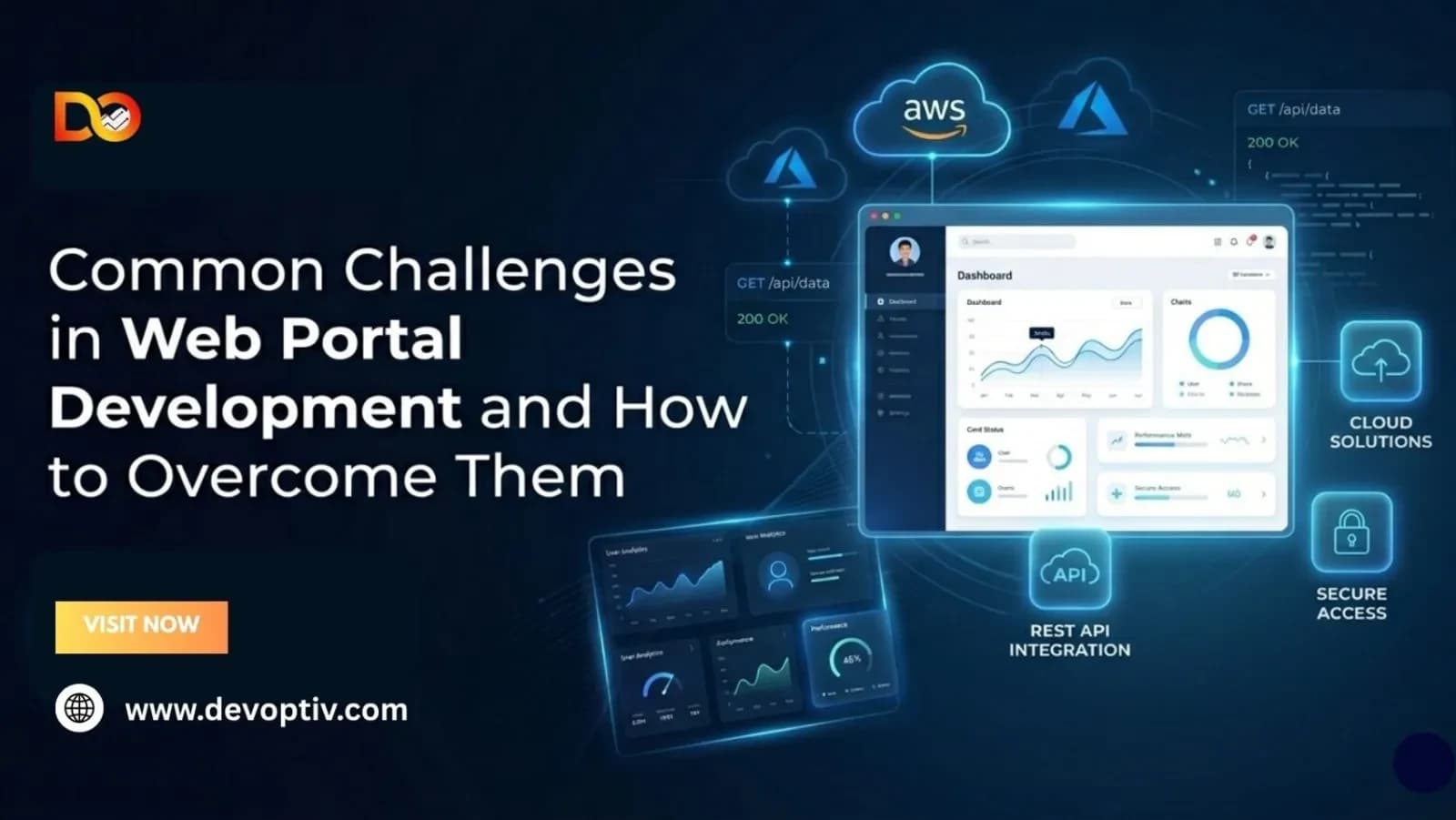
Integration flexibility. A headless portal can connect to any combination of CRM, ERP, analytics, and commerce systems through standardized APIs, without custom point-to-point integrations.
AI readiness. AI-powered personalization and recommendation engines require structured, modular content to function. A composable portal architecture is natively ready to consume and produce AI-driven outputs.
For enterprise portals in particular, the shift to composable architecture enables the kind of agility that's simply not achievable with legacy monolithic platforms. Portals that have adopted MACH architecture are reporting deployment cycle times reduced from weeks to hours for most feature changes.
9. AI-Powered Security and Zero-Trust Portals
As portals become more intelligent and handle more sensitive data, the security threat landscape has escalated in parallel. In 2026, attackers are using AI to automate vulnerability scanning, generate sophisticated phishing campaigns, and identify zero-day exploits faster than traditional security teams can respond.
The response from the portal development community is a shift to AI-powered, zero-trust security models that treat every access request, internal or external, as potentially hostile until proven otherwise.
Key developments reshaping portal security in 2026:
AI security monitoring. Intelligent systems continuously analyze traffic patterns, user behavior, and system anomalies in real time, flagging and responding to threats before they escalate.
Automated static analysis. AI tools scan portal codebases continuously for vulnerabilities, supply chain risks, and misconfigurations replacing the periodic manual security audit with always-on oversight.
Post-quantum cryptography readiness. Organizations managing long-lived sensitive data in portals are beginning early adoption of cryptographic standards designed to resist future quantum computing attacks.
Behavioral authentication. Rather than relying solely on credentials, AI systems authenticate users based on behavioral patterns, typing cadence, navigation habits, access patterns reducing the risk of compromised-credential attacks.
For portal operators, the practical takeaway is that security needs to be embedded in the development process from the first line of code, not audited at launch. Teams using modern meta-frameworks are beginning to benefit from security defaults that are harder to bypass accidentally but this doesn't eliminate the need for deliberate security architecture.
10. Progressive Web Apps and the Closure of the Native App Gap
For organizations still maintaining separate native mobile apps alongside their web portals, 2026 is the year to reconsider that strategy seriously.
Progressive Web Apps (PWAs) web portal experiences that can be installed on any device, work offline, send push notifications, and access device hardware have effectively closed the user experience gap with native applications for most business use cases.
The business case for PWAs over native apps:
A single codebase serves all platforms (desktop, iOS, Android), eliminating the cost and complexity of maintaining parallel development tracks.
Updates are deployed instantly to all users without requiring app store approval processes.
PWA portal experiences are indexed by search engines, unlike native app content, a significant advantage for portals that benefit from organic discovery.
Offline functionality enables portal access in low-connectivity environments, critical for field teams, logistics operations, or emerging market users.
For enterprise portals that currently redirect mobile users to an app store, migrating to a PWA architecture can dramatically reduce development overhead while improving the experience for users who were never going to download a dedicated app for an intranet or vendor portal.
The Strategic Takeaway: What Portal Owners Must Do Now
The trends outlined above are not distant possibilities. They are current realities adopted by forward-thinking organizations in 2026. The question for every portal stakeholder is not whether AI will reshape your portal it already is but how deliberately and strategically you approach that transformation.
Here is a practical framework for prioritizing action:
Audit your content architecture first. Many of the most powerful AI capabilities personalization, GEO, adaptive interfaces require structured, composable content as their foundation. If your portal content is locked into presentation templates, fix that before layering AI features on top.
Adopt edge-aware deployment for user-facing features. Personalization, authentication, and dynamic content delivery at the edge delivers measurable improvements in portal performance and user experience with relatively low implementation complexity using current platforms.
Move your development team to meta-framework tooling. If your portal engineering team isn't working with Next.js, Nuxt, or equivalent modern frameworks with TypeScript as the baseline, they're accumulating technical debt with every sprint.
Invest in security as infrastructure, not as a project. With AI-powered threats becoming standard, portal security needs to be continuous, automated, and embedded, not periodic and manual.
Experiment with agentic AI in your development workflow. Start with lower-risk use cases: automated testing, documentation generation, or boilerplate scaffolding. Measure the productivity impact and build from there.
Conclusion: Build the Portal That Builds Itself
The most successful portals of 2026 share a common characteristic: they are not static products maintained by a team. They are intelligent systems that learn, adapt, and improve continuously with human teams guiding strategy and oversight rather than manually executing every change.
This is not a future state. It is what your competitors are building right now.
The good news is that the tools, frameworks, platforms, and architectural patterns to build this kind of portal are available and accessible today. The barrier is no longer technical capability, it's strategic clarity and organizational willingness to move.
Your portal's next evolution starts with the decision to treat AI not as a feature to add, but as the operating principle to build around.
Ready to Build a Smarter Portal? Let's Talk.
At Devoptiv, we specialize in building AI-powered web portal development that don't just look modern, they think, adapt, and scale with your business. Whether you're starting from scratch or transforming a legacy platform, our team brings deep expertise in composable architecture, agentic AI workflows, edge deployment, and enterprise-grade security, so your portal stays ahead, not behind. Don't let your portal become invisible. Schedule a Free Strategy Call
What we offer:
AI-ready portal architecture & development
Hyper-personalization & adaptive UX implementation
Meta-framework development (Next.js, Nuxt, TypeScript)
Security-first, zero-trust portal design
Low-code integrations for faster team enablement