
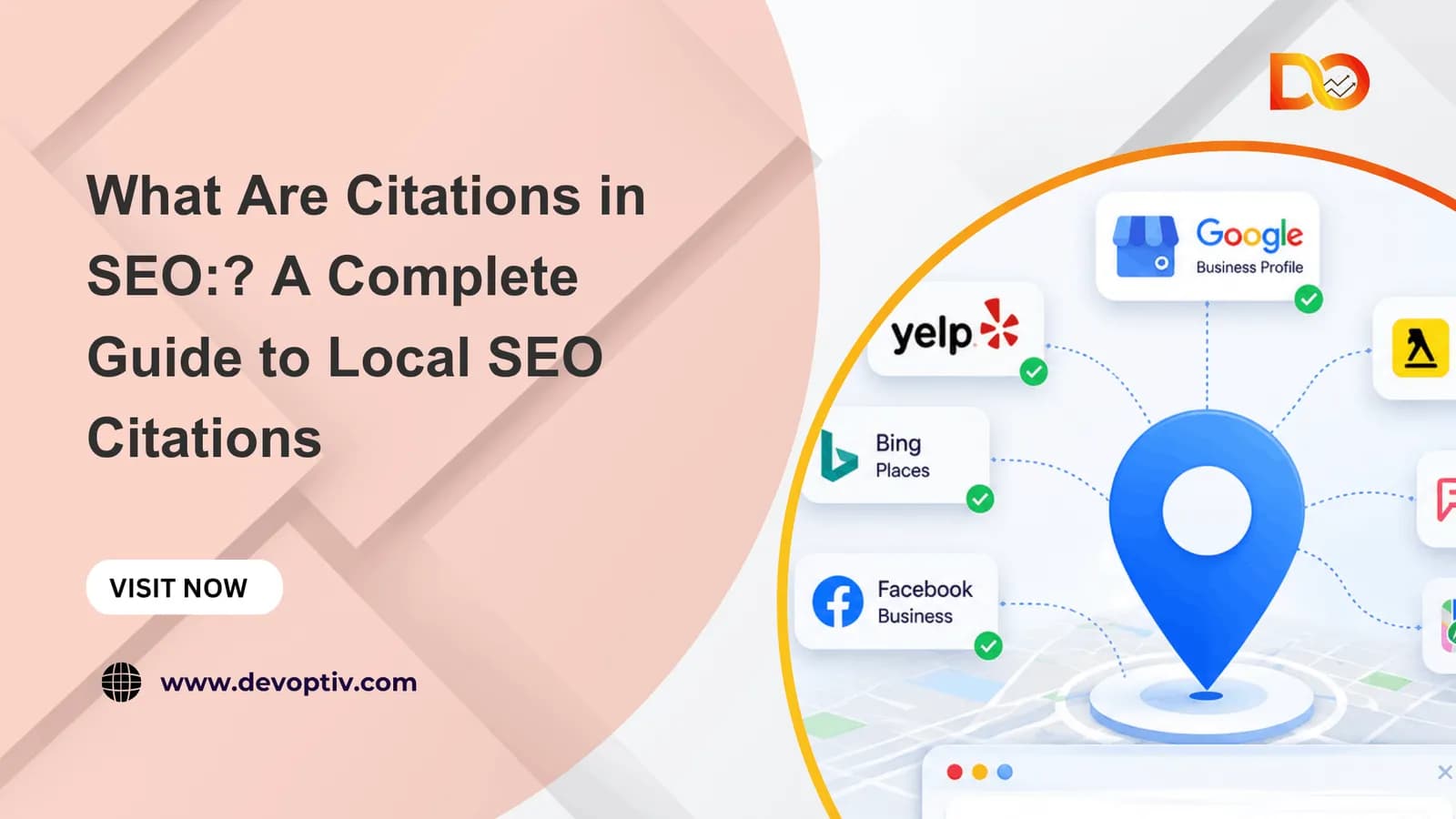
If you own or manage a local business, you have probably heard the term citations in SEO. But what is a citation in SEO, and why does it matter for your online visibility? In simple terms, a citation in SEO is an online mention of your business information, such as your business name, address, phone number, and website. These mentions can appear on business directories, maps, social platforms, industry websites, and other relevant online platforms.
For local businesses, local SEO citations help search engines and potential customers verify that a business is legitimate and active. When your business information is accurate and consistent across trusted websites, it can strengthen your local online presence and make it easier for customers to find the correct information about your business. In this guide, we will explain what citations in SEO are, why they matter, the different types of local citations, how to find citation opportunities, and how to manage and fix incorrect business listings.
What Are Citations in SEO?
A citation in SEO is an online mention of your business and its key information, such as your business name, address, phone number, website, category, or opening hours. These mentions can appear on business directories, map platforms, social media profiles, review sites, and industry-specific websites. The most common type of local citation is NAP, which stands for Name, Address, and Phone Number.
Local Citation Example
For example, a business listing for DevOptiv might look like this:
DevOptiv | Digital Marketing & Software Development | Mohali, Punjab, India | +91 XXXXX XXXXX | devoptiv.com
This is a local SEO citation because it provides information that helps search engines and customers identify and verify the business. A citation does not always need to include a link to your website. Even a simple mention such as “DevOptiv is a digital marketing and software development company based in Mohali” can be considered a citation.
So, local citations help establish a consistent online presence, making it easier for search engines to understand your business and for potential customers to find accurate information about it.
Why Do Citations Matter for Local SEO?
Local SEO citations help search engines and customers find, identify, and verify your business online. When your business information appears consistently across relevant and trustworthy websites, it strengthens your overall local online presence. Here are the main reasons why citations matter:
Improve local visibility: Accurate listings can help your business appear across directories, map platforms, and other local search results.
Build trust and credibility: Consistent business information makes it easier for search engines and customers to verify that your business is legitimate.
Help customers find you: Citations provide important details such as your address, phone number, website, and opening hours.
Support local rankings: While citations are only one part of local SEO, strong and consistent listings can support your visibility in local search.
Create additional discovery opportunities: Listing your business on relevant directories and industry websites can help new customers discover your brand.
The key is not simply to build as many citations as possible. Accuracy, consistency, relevance, and quality matter more than quantity. A smaller number of accurate listings on trusted and relevant citation sites can be more valuable than hundreds of low-quality or duplicate listings.
What is NAP, and Why Does Citation Consistency Matter?
NAP stands for Name, Address, and Phone Number. These are the core details used to identify your business across the web.
Your NAP information should remain consistent across your website, business profiles, directories, map listings, and other citation sites. Differences in your business name, address, or phone number can create confusion for both customers and search engines.
This is why citation consistency is an important part of citation management SEO. Before building new citations, review your existing listings and make sure all business information is accurate and up to date. The goal is simple: make it easy for search engines and customers to recognize and trust your business information wherever it appears online.
What Are the Different Types of SEO Citations?
SEO citations can appear in different formats and across many types of websites. The main types of local SEO citations include:
Structured Citations
Structured citations display your business information in a standard format. These are commonly found on business directories, map platforms, social media profiles, and review websites. They usually include details such as your business name, address, phone number, website, and business category.
Unstructured Citations
Unstructured citations are mentions of your business that appear naturally within online content. These may be found in blog posts, news articles, local websites, industry publications, or other relevant content.
Industry-Specific Citations
These citations appear on websites and directories related to your specific industry. For example, a restaurant may be listed on food directories, while a law firm may appear on legal directories. Industry-specific citations can help businesses reach a more relevant audience.
Local or Geographic Citations
These are listings on local business directories, community websites, chambers of commerce, and regional platforms. They are particularly useful for businesses targeting customers in specific cities or service areas. A strong citation strategy usually focuses on a combination of relevant, trustworthy, and accurate citation sources rather than simply submitting a business to as many directories as possible.
SEO Citations vs. Backlinks: What's the Difference?
Although SEO citations and backlinks can both support your online visibility, they are not the same. A citation is an online mention of your business information, such as its name, address, phone number, or website. A citation does not necessarily need to include a clickable link.
A backlink, on the other hand, is a clickable link from one website to another. Backlinks are commonly used in SEO to help search engines understand the relevance and authority of a webpage.
The Key Difference
Citations help establish and verify your business's online presence, especially for local SEO.
Backlinks direct users and search engines from one website to another and can support broader organic SEO efforts.
Some business listings can provide both a citation and a backlink. However, the primary goal of citation building is to maintain accurate and consistent business information across relevant online platforms.
What Are the Most Important Citation Sources for Local Businesses?
Not all citation sites provide the same value. The best local SEO citation sites are usually trusted, relevant to your business, and commonly used by your target audience. Here are the most important types of citation sources to consider:
Major Search and Map Platforms
Start with the platforms where customers commonly search for local businesses. These listings can help improve your business's visibility and provide customers with essential information such as your location, contact details, website, and business hours.
General Business Directories
Well-established business directories are another important source of local citations. These platforms allow businesses to create profiles and maintain consistent information across multiple online locations.
Industry-Specific Citation Sites
Look for directories and platforms related to your industry. These local SEO citations can be especially valuable because they place your business in front of a more relevant audience.
Local and Geographic Directories
Local business directories, chambers of commerce, community websites, and regional platforms can create valuable citation opportunities, particularly for businesses targeting a specific city, region, or service area.
The best approach to citation building is to focus on quality, relevance, and accuracy. Instead of submitting your business to every available directory, prioritize trusted citation sites that are relevant to your location, industry, and target customers.
Where Can You Find Local SEO Citation Opportunities?
Finding the right local SEO citation opportunities is an important part of an effective citation-building strategy. Rather than submitting your business to every available directory, focus on websites that are relevant, trustworthy, and useful for your target customers. Here are some practical ways to find citation sites for your business:
Search for Your Competitors' Citations
Analyze where competing local businesses are listed. If reputable directories or industry platforms list several of your competitors, they may also be relevant opportunities for your business.
Look for Industry-Specific Directories
Search for directories, associations, and platforms related to your industry. These local citations can be particularly valuable because they help connect your business with a relevant audience.
Search for Location-Based Opportunities
Use searches based on your city, region, or service area to discover local business directories, community websites, chambers of commerce, and other geographically relevant platforms.
Check Existing Local SEO Citations
Before creating new listings, audit your current business information. You may discover missing profiles, duplicate listings, or outdated citations that need to be corrected. You can also search for free local citation sites and local SEO citations lists, but always review each platform before submitting your business. Prioritize citation opportunities that are relevant to your industry or location, trusted by users, and capable of displaying accurate business information.
How to Audit and Fix Incorrect Local Citations
Over time, your business information may become inconsistent across different citation sites. Changes to your business name, address, phone number, website, or operating hours can leave behind outdated or duplicate local citations.
A regular local citation audit helps you identify and fix these issues.
1. Find Your Existing Citations
Search for your business name and contact information on major directories, map platforms, local websites, and industry-specific directories. You can also use citation management SEO tools to identify existing listings.
2. Check for Inaccurate or Duplicate Information
Review each listing and look for:
Incorrect business name, address, or phone number
Outdated website URLs or business hours
Duplicate business profiles
Old addresses or contact details
Missing or incomplete information
3. Update or Remove Incorrect Listings
Claim your business profile where possible and update the incorrect information. If duplicate listings exist, request that they be merged or removed to avoid confusion.
4. Maintain Citation Consistency
After fixing existing issues, make sure the same core business information is used when creating new local SEO citations. Regular citation management can help keep your listings accurate as your business grows or changes.
A clean and consistent citation profile is often more valuable than simply having a large number of business listings. Focus on keeping your most important citations accurate, complete, and up to date.
How Many Local Citations Does a Business Need?
There is no fixed number of local SEO citations that every business needs. The right number depends on factors such as your industry, location, competition, and target market. Instead of focusing only on quantity, prioritize building accurate and relevant local citations. Start with major business and map platforms, then add trusted industry-specific and location-based citation sites that are relevant to your business.
A business in a highly competitive local market may need a stronger citation profile than one operating in a less competitive area. However, creating hundreds of low-quality listings is unlikely to provide the same value as maintaining a smaller number of high-quality, consistent citations. The best approach is to first ensure your most important listings are complete and accurate, then continue identifying relevant citation opportunities over time. In short: focus on quality, relevance, and consistency not simply the number of citations.
Common Local Citation Mistakes to Avoid
Poorly managed local citations can create inconsistent business information and reduce the value of your citation-building efforts. Avoid these common mistakes:
Inconsistent NAP information: Using different business names, addresses, or phone numbers across citation sites can create confusion.
Creating duplicate listings: Multiple profiles for the same business can make it difficult for search engines and customers to identify the correct listing.
Choosing irrelevant citation sites: Listing your business on unrelated or low-quality directories simply to increase citation numbers can add little value.
Using outdated information: Old addresses, phone numbers, website URLs, or business hours should be updated or removed.
Ignoring industry and local directories: Focusing only on general directories can cause you to miss valuable industry-specific and location-based citation opportunities.
Building citations without checking accuracy: Every new listing should be reviewed to ensure the information is complete and consistent.
Focusing only on quantity: A large number of citations does not automatically mean better local SEO. Relevance, trust, accuracy, and consistency matter more.
A successful local citation strategy is not about being listed everywhere. It is about building and maintaining accurate business information on the right citation sites.
Conclusion
Citations in SEO are an important part of a strong local search strategy. By maintaining accurate business information across relevant directories, map platforms, industry websites, and local platforms, businesses can build a more consistent and trustworthy online presence. Effective local SEO citations are not about creating as many listings as possible. The focus should be on quality, relevance, consistency, and accuracy. Keeping your NAP information up to date, removing duplicate listings, and choosing relevant citation sites can make your citation-building efforts more effective.
Whether you are looking for free local citation sites, building new listings, or managing existing profiles, start with the platforms that are most relevant to your business and customers. Regular citation audits and ongoing citation management SEO can help maintain accurate information as your business grows. Ultimately, a well-managed citation profile makes it easier for search engines to understand your business and for customers to find the right information when they need it.