
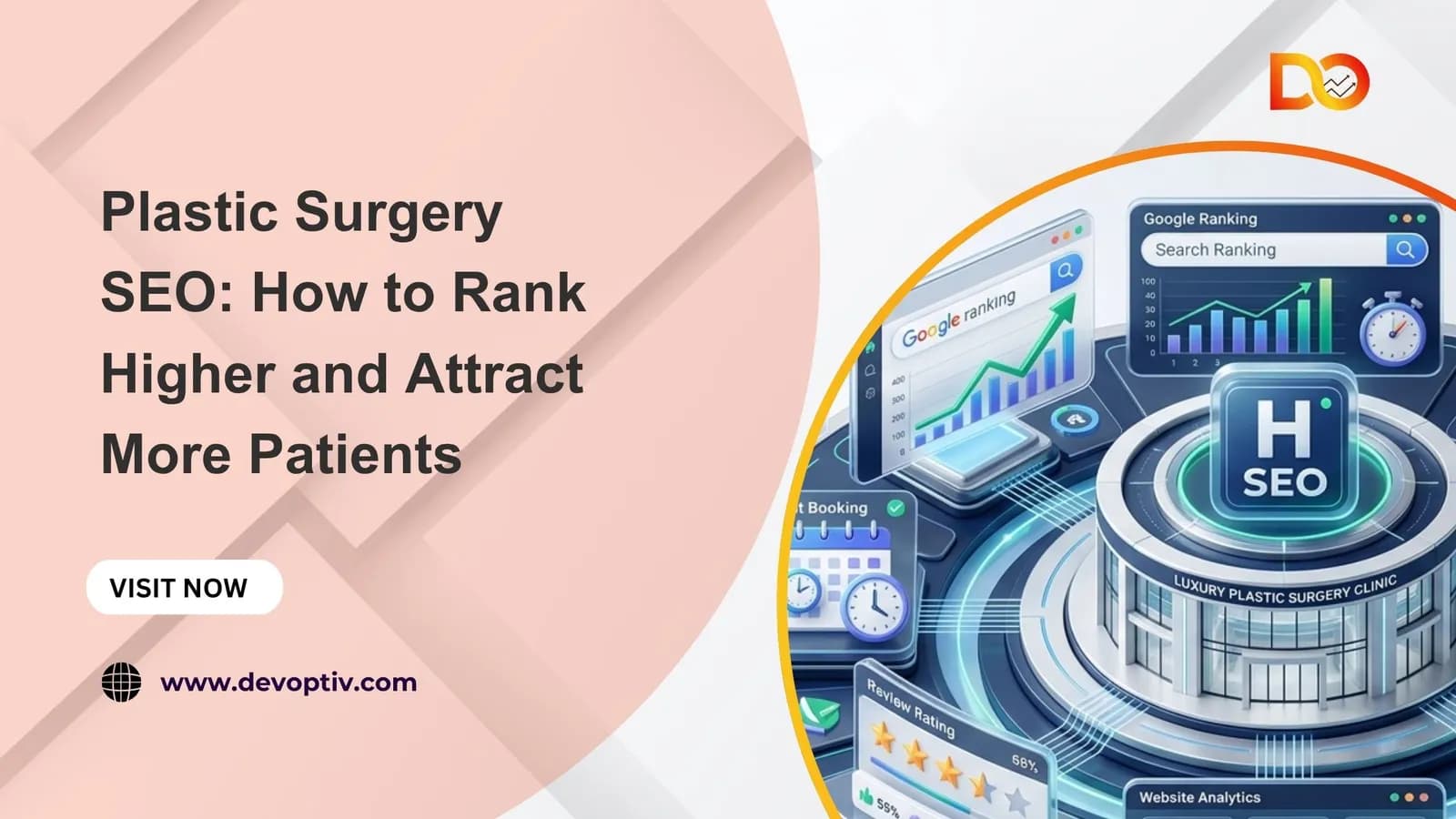
Most people don't look for a plastic surgeon in the Yellow Pages anymore. They open Google and search for something like "best facelift surgeon near me." If your practice doesn't show up there, you're missing patients already looking for what you offer.
SEO (search engine optimization) helps Google find and rank your website for these searches. It's ongoing work that leads to more consultations and steady growth over time. This guide covers the practical steps that help plastic surgery practices rank higher and turn that visibility into real patients.
What is Plastic Surgery SEO?
Plastic surgery SEO is the specialized practice of optimizing a cosmetic or reconstructive surgery practice's online presence to rank higher in search engine results. It encompasses technical website improvements, keyword optimization, content creation, and authority-building strategies specifically tailored to the healthcare and aesthetic surgery industry.
Unlike general SEO, plastic surgery SEO requires understanding:
HIPAA-compliant content practices
Medical credibility signals (board certifications, before-and-after galleries)
Local search dominance
Patient review management
Specialized surgical terminology alongside patient-friendly language
This multifaceted approach ensures your practice appears where prospective patients search while maintaining professional medical standards and regulatory compliance.
Why SEO is Essential for Plastic Surgery Practices
The plastic surgery industry is increasingly competitive. Patients have dozens of options within their geographic area, and they evaluate practices based on online reputation, credentials, and portfolio quality. Here's why SEO matters:
Patient Acquisition: Organic search generates 51% of website traffic for healthcare practices. Ranking for high-intent keywords means capturing patients ready to schedule consultations.
Cost Efficiency: Compared to paid advertising, SEO delivers long-term returns. While PPC campaigns stop generating leads when you stop paying, organic rankings provide sustained visibility.
Trust Building: Appearing in organic search results carries more weight with patients than ads. Higher rankings signal authority and legitimacy to prospective patients evaluating surgeons.
Competitive Advantage: If competitors aren't investing in SEO, you'll dominate local search results. If they are, SEO becomes non-negotiable for market visibility.
Patient Behavior: Patients research thoroughly before surgical decisions. They compare surgeons, read reviews, examine galleries, and want detailed information-all factors that SEO addresses.
How Patients Search for Plastic Surgeons
Knowing how patients search helps you create content that meets them at the right moment:
Procedure searches - "rhinoplasty surgeon," "facelift cost," "breast augmentation recovery"
Location searches - "plastic surgeon near me," "top cosmetic surgeon in [city]"
Problem-solving searches — "how to reduce under-eye bags"
Comparison searches — "implants vs. fat transfer"
Credibility searches — "board-certified plastic surgeons," "Dr. [Name] reviews"
Patients typically move from learning about a procedure, to comparing surgeons, to finally deciding. Good content should speak to all three stages, not just the last one.
Factors That Google Considers to Rank Plastic Surgeon Websites
Google's ranking algorithm evaluates hundreds of factors. For plastic surgery practices, the most critical include:
E-E-A-T (Experience, Expertise, Authoritativeness, Trustworthiness): Medical credentials, board certifications, years of experience, and patient testimonials are paramount.
Topical Authority: Comprehensive content about specific procedures signals expertise. A website with 50 detailed pages about rhinoplasty ranks higher than one with basic descriptions.
Site Speed and Mobile Optimization: Patients research on phones. Google prioritizes mobile-friendly, fast-loading sites.
Backlink Quality: Links from medical associations, industry publications, and authoritative healthcare sites boost rankings more than generic directory listings.
Local Signals: Google My Business optimization, local citations, and location-specific content dominate "near me" searches.
User Engagement: Lower bounce rates, higher time-on-page, and strong click-through rates signal quality content that Google rewards.
HIPAA Compliance and Security: SSL certificates and privacy policies build trust—factors Google and patients value.
Website Foundations: Technical SEO & Site Architecture
Before publishing content, ensure your website's technical foundation supports ranking.
Site Structure: Organize pages hierarchically. A plastic surgery website might have: Homepage → Procedures → Facelift (parent) → Mini Facelift (child page). This logical structure helps Google understand content relationships.
Mobile Optimization: At least 60% of searches for cosmetic procedures happen on mobile. Your site must be fully responsive with fast loading times (under 3 seconds on 4G).
Core Web Vitals: Google prioritizes sites with good loading performance (Largest Contentful Paint), responsiveness (First Input Delay), and visual stability (Cumulative Layout Shift).
URL Structure: Use descriptive, SEO-friendly URLs like /procedures/facelift-surgery/ instead of /page-123/.
Internal Linking: Link related procedures and patient education content. For example, link "facelift" to "neck lift" and "eyelid surgery" pages to build topical authority.
Schema Markup: Implement medical schema (doctor, healthcare provider, medical procedure) to help Google understand your content and improve rich snippets in search results.
SSL Certificate: Ensure your site uses HTTPS - Google ranks encrypted sites higher.
For additional technical guidance on healthcare websites, refer to DevOptiv's Healthcare Website Development guide, which covers security, scalability, and patient-centric design for medical practices.
Keyword Research: How Cosmetic Surgery Patients Search Online
Good SEO starts with knowing what patients actually type into Google:
High-intent keywords — "rhinoplasty surgeon in [city]," "board-certified cosmetic surgeon near me"
Informational keywords — "how much does a facelift cost?", "rhinoplasty recovery time"
Long-tail keywords — "natural-looking facelift without surgery [city]," "mommy makeover cost"
Not every practice has the bandwidth to keep up with all of this in-house, especially once you're managing more than one location. Some practices bring in a partner offering 360 international SEO services to handle everything from keyword research to technical fixes under one roof. Others prefer to work with an outsourced team for ongoing content and optimization - SEO outsourcing services can keep output consistent without pulling your staff away from patient care.
Aim for keywords with a few hundred monthly searches and manageable competition. Tools like SEMrush, Ahrefs, or Moz can help find search volume and related terms worth targeting.
On-Page Optimization
On-page SEO ensures each page is optimized for target keywords and user experience.
Title Tags: Keep under 60 characters. Example: "Facelift Surgery in Boston | Board-Certified Cosmetic Surgeon"
Meta Descriptions: 155-160 characters summarizing page content with target keywords. Example: "Discover natural-looking facelift results from Dr. [Name]. Board-certified plastic surgeon in [City] with 20+ years experience. Schedule consultation."
Header Structure: Use H1 for page title (one per page), H2 for main sections, H3 for subsections. Include keywords naturally - avoid keyword stuffing.
Keyword Placement: Include target keywords in:
First 100 words of content
At least 2-3 times throughout naturally
In header tags
In image alt text
Content Depth: Aim for 2,000+ words for competitive keywords like "plastic surgeon" or "cosmetic surgery." Shorter content (800-1,200 words) works for specific procedures or local searches.
Readability: Use short paragraphs, bullet points, and white space. Patients shouldn't need to read dense medical textbooks.
Before-and-After Galleries: Optimize images with descriptive filenames and alt text: "facelift-before-after-patient-1.jpg" and alt text "Facelift results: 55-year-old female, 3 months post-op."
Internal Linking: Link to related procedures, testimonials, and educational content using descriptive anchor text like "learn more about facelift recovery" instead of "click here."
Content Marketing: Building Content Authority That Converts
Patients research extensively before choosing surgeons. Content marketing builds authority while educating prospects through their decision journey.
Procedure Guides: Comprehensive articles covering "What is [procedure]?", benefits, candidacy, recovery, cost, and risks. Example: "Complete Guide to Rhinoplasty: Everything Patients Need to Know" (3,000-5,000 words).
Patient Education: Explain procedures in accessible language. Separate pages for "Facelift for Over 50s" vs. "Facelift for Over 60s" capture specific audience segments.
Before-and-After Analysis: Publish case studies explaining techniques, approaches, and patient satisfaction. These build trust and illustrate your expertise.
FAQ Content: Address common patient questions: "How long do facelift results last?", "Is facelift surgery painful?", "Can you combine procedures?" FAQ content ranks for numerous long-tail keywords simultaneously.
Blog Content: Weekly posts on cosmetic trends, recovery tips, and procedural advances establish your practice as a thought leader. Topics like "5 Non-Surgical Facelift Alternatives in 2026" or "Why Natural Results Matter in Cosmetic Surgery" attract ongoing organic traffic.
Video Content: Embedded videos explaining procedures, surgeon credentials, or patient testimonials boost engagement and dwell time - factors Google rewards with higher rankings.
Regular Updates: Refresh existing content annually. Adding "Updated [Year]" signals freshness and maintains ranking positions.
Local SEO: Winning Google Maps & Geographic Rankings
Most plastic surgery searches include location intent. Dominating local results is critical.
Google My Business Optimization:
Complete all fields (name, address, phone, hours, website)
Upload high-quality photos showing your facility, staff, and results
Encourage patient reviews (respond to all - positive and constructive criticism)
Post regular updates about promotions, new procedures, or surgical advances
Local Citations: Ensure your practice appears in healthcare directories (Healthgrades, Vitals, Zocdoc, RealSelf) with consistent information. Inconsistent data confuses Google and hurts rankings.
Location Pages: For multi-location practices, create dedicated pages for each clinic: "/rhinoplasty-surgeon-new-york/" and "/cosmetic-surgeon-los-angeles/". Optimize each with local keywords and service descriptions.
Local Schema Markup: Implement Local Business schema with address, phone, hours, and service areas to help Google understand your geographic relevance.
Local Content: Create location-specific content addressing regional preferences. "Top Cosmetic Surgery Trends in California" differs from "Cosmetic Surgery Preferences in Texas."
Reviews Matter: Practices with 50+ reviews and 4.5+ ratings rank higher in local results. Implement a review generation system requesting feedback from satisfied patients.
Authority & Trust: Link Building for Surgical Practices
Backlinks from authoritative websites signal trust to Google. For plastic surgery practices, focus on quality over quantity.
Healthcare Association Links: Pursue memberships in American Society of Plastic Surgeons (ASPS), American Academy of Cosmetic Surgery (AACS), or similar boards. These organizations often link to member websites.
Industry Publication Features: Publish articles in healthcare journals, cosmetic surgery publications, or reputable medical blogs. Links from these sources carry significant authority weight.
Expert Commentary: Offer commentary on cosmetic surgery trends to health and beauty writers. Media coverage frequently includes backlinks.
Patient Testimonial Pages: Feature detailed patient stories on your website. Satisfied patients may link to your site from their blogs or social media.
Professional Directories: Register in trusted medical directories (Healthgrades, Vitals, Zocdoc, Ratemds). These provide both links and referral traffic.
Avoid: Purchasing links, link farms, or irrelevant directories. Google penalizes artificial link building. Focus on earning links through quality content and relationships.
The ROI of SEO: A Business Case for Plastic Surgeons
Measuring SEO ROI justifies ongoing investment and informs strategy adjustments.
Key Metrics to Track:
Organic Traffic: Monitor monthly organic visitors. A 50% increase in organic traffic typically translates to 30-40% more consultations.
Keyword Rankings: Track rankings for 50-100 target keywords. Improvement from position 15 to position 5 dramatically increases click-through rates.
Consultation Requests: Link Google Analytics to your CRM. Attribute leads and consultations directly to organic search.
Cost Per Lead: Divide total SEO investment by generated leads. Most practices find organic leads cost 60-70% less than paid advertising.
Patient Lifetime Value: Correlate organic patients with retention, referral rates, and lifetime value. Organic patients often have higher satisfaction and referral rates than paid traffic.
Revenue Impact: Calculate revenue from organic-sourced patients. A practice acquiring 10 additional facelift patients monthly ($12,000 per procedure) generates $120,000 monthly revenue - justified by reasonable SEO investment.
Timeline: SEO typically requires 3-6 months before meaningful results, 6-12 months for competitive keyword rankings. This longer timeline means investing today generates returns for years.
Your Growth Action Plan from Scratch
You don't need to rebuild your entire website to get started. A simple, phased plan works well:
Timeline | Phase | What to Do |
|---|---|---|
Month 1 | Foundation | Research keywords, audit your site for technical issues, optimize Google Business Profile, and set up Analytics and Search Console |
Months 2-3 | Content & Technical | Build new pages for priority keywords, optimize existing pages, strengthen internal linking, and add schema markup |
Months 4-6 | Authority Building | Publish content regularly, set up a review request system, build directory citations, and reach out for backlinks |
Ongoing | Maintenance | Check rankings monthly, refresh content quarterly, respond to reviews, and keep publishing new content |
Most practices invest between $2,000 and $5,000 a month on professional SEO, with returns typically showing up within 6 to 12 months. If you're looking for support across the broader healthcare space, DevOptiv's SEO for Healthcare and Wellness services can help.
Final Thoughts
Plastic surgery SEO isn't a project you finish once, it's ongoing work that keeps successful practices visible and growing. Results won't appear overnight, but consistent effort on keywords, content, and authority building steadily brings in the right patients.
Whether you're starting fresh or improving an existing site, these fundamentals reflect how Google ranks medical websites and how patients actually search for surgeons. The practices at the top aren't waiting to be found - they're actively investing in being found.
If you'd rather have specialists handle the strategy while you focus on patient care, feel free to contact DevOptiv for a consultation on where your practice currently stands and what a realistic growth plan could look like.
Frequently Asked Questions:-
Q: How long does plastic surgery SEO take to show results?
A: Most practices see measurable improvements within 3-6 months. Ranking for competitive keywords typically requires 6-12 months of consistent effort. Patience and persistence are essential.
Q: Do I need to hire an SEO agency or can I do this in-house?
A: Both approaches work. In-house teams maintain direct control but require expertise and time. Professional SEO agencies like DevOptiv bring specialized knowledge, tools, and proven strategies, allowing you to focus on patient care.
Q: How much should I invest in plastic surgery SEO?
A: Investment varies based on competition, goals, and current website status. Plan for $2,000-5,000 monthly for professional services. ROI typically appears within 12 months through increased patient consultations and reduced advertising costs.
Q: What's more important: local SEO or national SEO?
A: For most plastic surgery practices, local SEO is a priority. Patients typically search locally ("plastic surgeon near me"), making local Google Maps and location-based rankings most valuable. However, practices with strong reputations may benefit from national rankings for specialized procedures.
Q: How do I generate more patient reviews?
A: Implement an automated review request system through email or SMS post-consultation. Make review links easily accessible. Incentivize reviews (mentioning discount coupons, not offering money-which violates most review platforms' policies). Follow up personally with satisfied patients.
Q: Should I focus on multiple procedures or specialize?
A: Building authority in specific procedures (rhinoplasty, facelift, breast augmentation) ranks better than generic "plastic surgery" content. Create core content around 3-5 signature procedures, then expand strategically.
Q: How do I handle negative reviews?
A: Respond professionally and compassionately. Address concerns without being defensive. Offer to resolve issues offline. Negative reviews, when handled well, often increase trust more than removing them.